
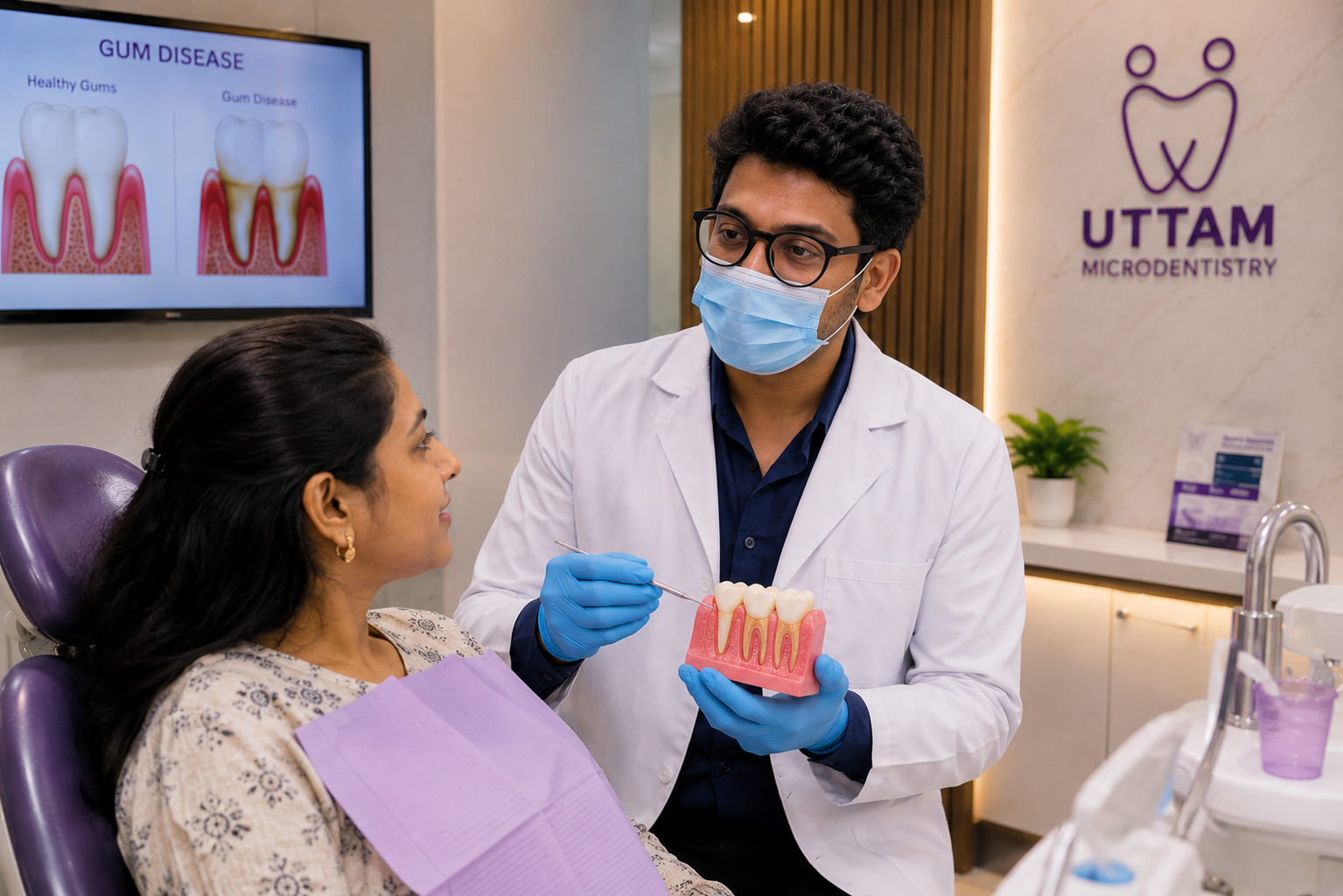
Why Treat Gum Disease at Uttam Microdentistry in Dombivli Immediately?
- Bleeding is the first sign of active bacterial infection.
- Untreated gum disease leads directly to tooth loss.
- Linked to severe health issues like heart disease and diabetes.
- Causes persistent bad breath that brushing cannot fix.
How Does Uttam Microdentistry in Dombivli Treat Gum Disease?
- Deep scaling and root planing to remove subgingival tartar.
- Laser gum therapy for painless bacterial removal.
- Flap surgery for advanced periodontitis cases.
- Guided bone regeneration to repair lost jawbone.
Key Benefits
Discover why this treatment is the right choice for you.
Halts Bone Destruction
Active periodontitis destroys the bone supporting your teeth - professional treatment stops this irreversible damage from progressing.
Eliminates Bleeding & Bad Breath
Removing bacterial deposits from below the gum line resolves the inflammation causing bleeding and the sulphur compounds causing halitosis.
Improves Systemic Health
Treating periodontal disease measurably improves diabetic blood sugar control and reduces cardiovascular inflammation markers.
Prevents Tooth Loss
The majority of teeth lost to gum disease could be saved with early, adequate periodontal treatment - prevention is always better than implants.
Your Treatment Journey
Here is exactly what to expect at Uttam Microdentistry, Dombivli — from your first call to your final smile.
Full Periodontal Assessment
Systematic probing of all 6 surfaces of every tooth to measure pocket depths, bleeding on probing, recession and mobility. Bone levels assessed on digital X-rays. A periodontal chart documents the full baseline status for monitoring treatment response.
Oral Hygiene Instruction & Education
Personalised instruction on effective brushing technique (Bass method), interdental cleaning (floss, water flosser, interdental brushes) and dietary modifications. This phase is non-negotiable - periodontal treatment is ineffective without the patient's home hygiene being optimal.
Deep Cleaning - Scaling & Root Planing (SRP)
Under local anaesthesia per quadrant, ultrasonic and hand instruments remove all calculus deposits from below the gum line and smooth the root surface (root planing). This removes the bacterial reservoir driving the disease. Typically done in 2-4 appointments depending on case severity.
Re-Evaluation & Maintenance Plan
8 weeks after SRP, pockets are re-probed to assess treatment response. Pockets that have not responded sufficiently are reassessed for surgical therapy. Responding patients enter a 3-4 monthly supportive periodontal therapy schedule to maintain the achieved results long-term.
Full Periodontal Assessment
Systematic probing of all 6 surfaces of every tooth to measure pocket depths, bleeding on probing, recession and mobility. Bone levels assessed on digital X-rays. A periodontal chart documents the full baseline status for monitoring treatment response.
Oral Hygiene Instruction & Education
Personalised instruction on effective brushing technique (Bass method), interdental cleaning (floss, water flosser, interdental brushes) and dietary modifications. This phase is non-negotiable - periodontal treatment is ineffective without the patient's home hygiene being optimal.
Deep Cleaning - Scaling & Root Planing (SRP)
Under local anaesthesia per quadrant, ultrasonic and hand instruments remove all calculus deposits from below the gum line and smooth the root surface (root planing). This removes the bacterial reservoir driving the disease. Typically done in 2-4 appointments depending on case severity.
Re-Evaluation & Maintenance Plan
8 weeks after SRP, pockets are re-probed to assess treatment response. Pockets that have not responded sufficiently are reassessed for surgical therapy. Responding patients enter a 3-4 monthly supportive periodontal therapy schedule to maintain the achieved results long-term.
Frequently Asked Questions
Common questions about this treatment.
Cost of Gum Disease Treatment in Dombivli
Actual cost may vary based on your specific case requirements.
Factors affecting the cost:
- 1Severity of periodontal disease (gingivitis vs mild vs moderate vs severe periodontitis)
- 2Number of quadrants requiring deep cleaning under anaesthesia
- 3Need for local antibiotic delivery into deep pockets
- 4Need for surgical periodontal therapy for non-responding cases
Meet Your Specialists
Our experienced team is dedicated to providing you with the best care.
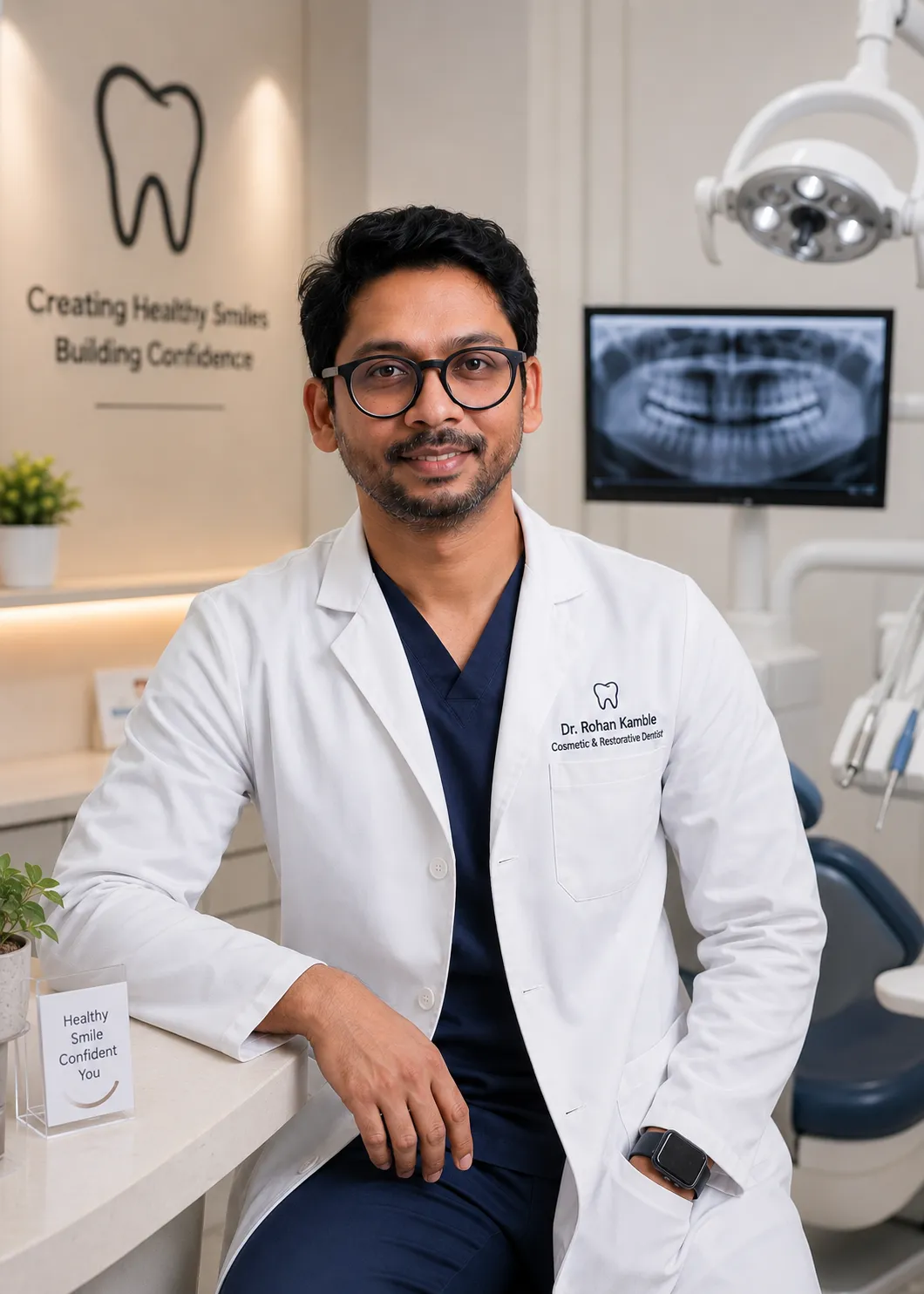
Dr. Rohan Kamble
BDS | Endodontist & Microscope-Assisted Dentist
Book Your Gum Disease Treatment in Dombivli Consultation
Share your mobile number and we will call or WhatsApp you back to confirm a slot.
Need to speak to us now?
+91 91363 23773 WhatsApp usKalyan-Shilphata Road, opposite Sai Baba Mandir, Nilje. Mon-Sat 10 AM-2 PM and 5 PM-9 PM.